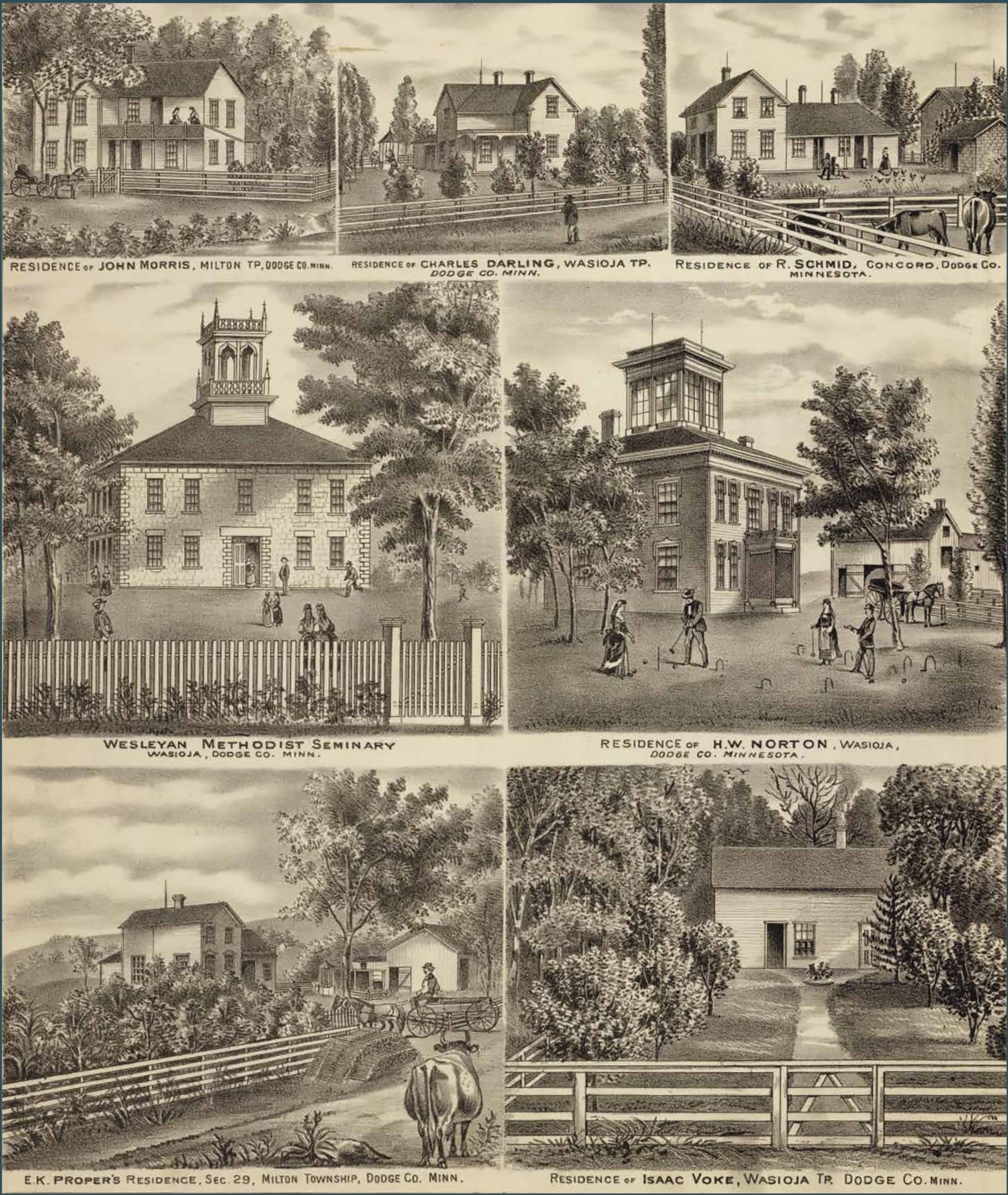
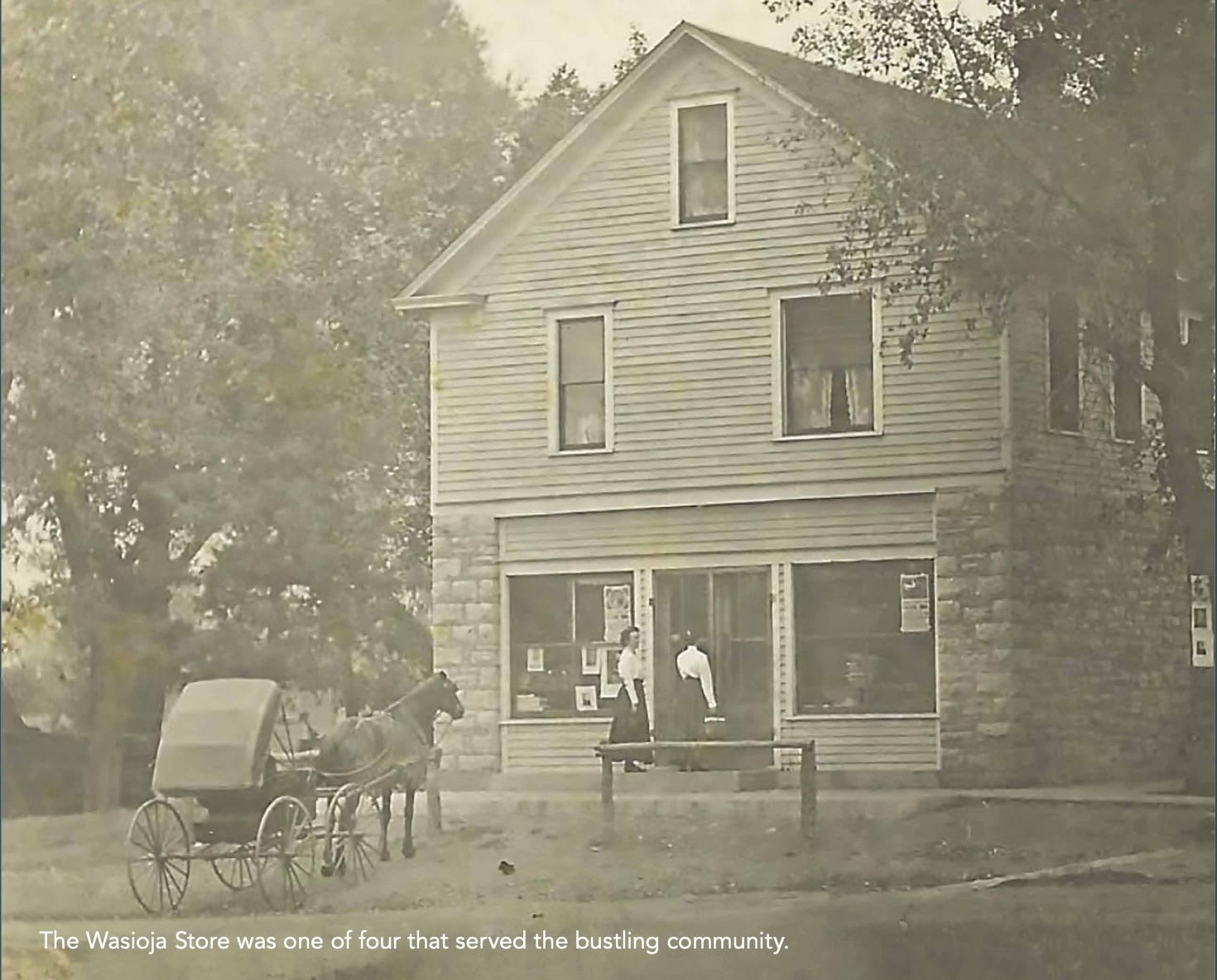
This district is all that remains of the ambitious village of Wasioja, which was established in the fall of 1854. The Treaty of Traverse des Sioux in 1851 removed the Dakota from their traditional lands, opening 24 million acres for white settlement in southern and western Minnesota, and reducing Dakota land access to a mere 2,800 acres along the Minnesota River. Within two years, the village included a hotel, four dry goods stores, a hardware store, a saloon, and a post office. The village boasted a doctor, dentist, veterinarian, justice of the peace, tailor, blacksmith, and a butcher. By October 1857, 181 people lived in the town.
Wasioja citizens created a limestone quarry nearby, and they used the stone to build a school, which still stands. In 1860, an esteemed seminary was also built from the local limestone, drawing students from around the region. By the time Minnesota achieved statehood in 1858, Wasioja seemed destined for greatness.
However, a series of events soon unfolded which dashed all hope for success and prosperity and resulted in the near disappearance of the town. First, in 1859 the town lost the fierce competition with Mantorville to be named the county seat. Secondly, in 1861 many of the male students of the seminary left to fight in the Civil War. The final blow fell in 1865 when the railroad, in its headlong expansion to the West, bypassed Wasioja.
The rest, as they say, is history. These unfortunate turns of fate brought on a sudden and irreversible decline of the town. The ambitions of Wasioja's founders were never realized. But their ghosts remain in the form of the school, limestone kiln, recruiting station, seminary ruins, church, and home of the area's predominant stonemason.