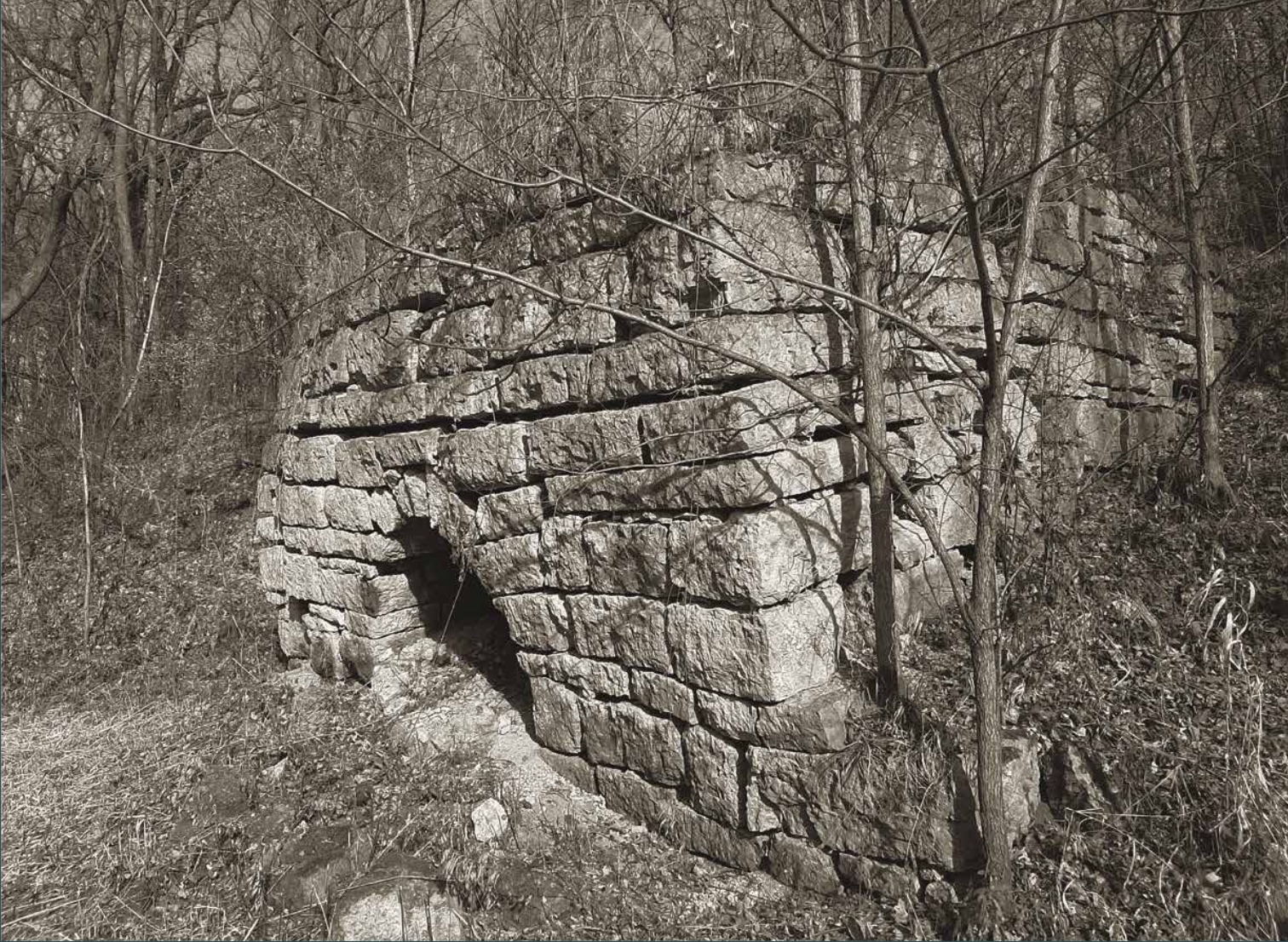
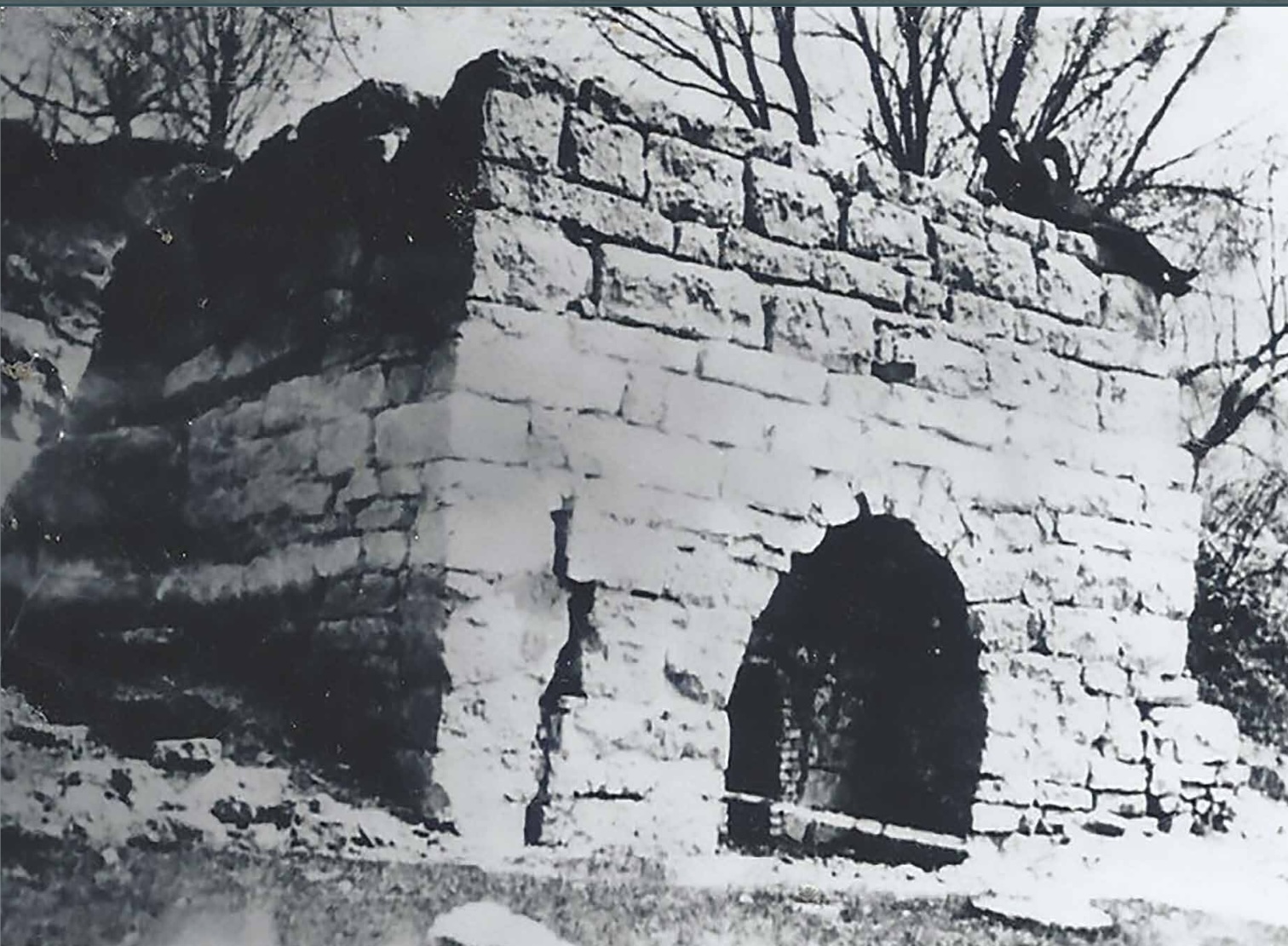
The limestone cliffs along the Middle Zumbro River are a beautiful natural feature. But for Wasioja's earliest settlers, the limestone was an essential building block for the town, for both stone walls and the mortar that held them.
James Paul, a Scottish immigrant and stonemason, knew how to create the mortar in a specialized process called lime burning. Paul built a kiln into the side of the cliffs above the river. Tending the kiln was difficult and dangerous work. To transform limestone into lime, it is heated to over 1,600 degrees for three or four days. The chemical transformation creates a noxious and poisonous gas. Once the lime is created, it is still volatile and could burn skin.
Lime could be used for a variety of purposes, including creating white paint, antiseptic, and fertilizer, but Wasioja lime was mostly used for creating mortar. When lime is mixed with ash and rehydrated, it creates a cement-like material to bind bricks or stones.
Limestone quarrying and burning was central to Wasioja's early growth. At its peak, there were four kilns in Wasioja. The stones and lime were used to construct the sturdy buildings that are still standing. Quarrying in Wasioja sped up with the building of a rail line to the local quarries in 1894 and continued even after the rail line was closed in 1911.
James Paul continued to work in the lime business until the 1870s, and his son William worked as a stonecutter. James had retired from the work by 1880 and died in 1892.